Catherine Gammon

The composition is the thing seen by everyone living in the living they are doing, they are the composing of the composition that at the time they are living is the composition of the time in which they are living… Gertrude Stein

Tag: Women

Tuesday is publication day!

Dear Friends and Readers,

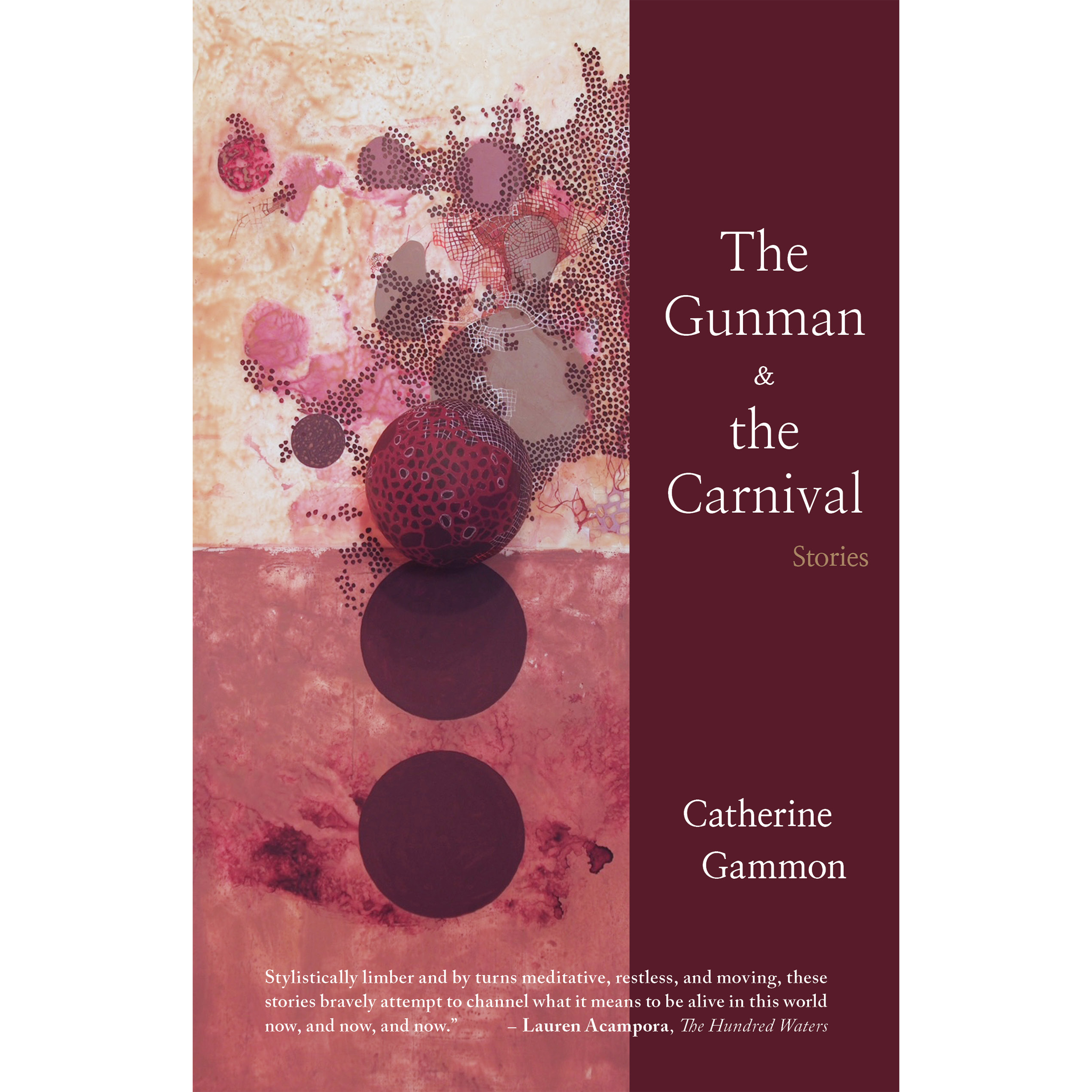
My new collection of stories, The Gunman and the Carnival, is coming, any minute, from Baobab Press. Please join me in celebrating — attend the launch in Pittsburgh if you’re close by or the March livestream event if you can (details below) — and if you’ll be at #AWP24 please stop by Baobab’s booth and show them some love.
And most of all, wherever you are, please read the book!

Advance Praise

“In The Gunman and the Carnival, Catherine Gammon mirrors the brightly fractured nature of our lives at the sharp edge of this American moment. Her characters are recognizable in their striving for human connection in our time of despair and isolation—and in their struggle for footing upon a sinking landscape. Stylistically limber and by turns meditative, restless, and moving, these stories bravely attempt to channel what it means to be alive in this world now, and now, and now.” — Lauren Acampora, The Hundred Waters

“Here are a handful of dreams crumbled to ash. Actors on the cusp of stardom, who instead of making it, find themselves playing dead bodies and waiting tables. A recovering alcoholic savoring a sense of stability, who gifts herself a birthday walk on the beach only to find a body washed up at her feet. A man and woman who fall easily in love, and then, just as easily, into mutual resentment. What does a person do when their life fails to meet their expectations, when their hopes wilt before they fully bloom? Catherine Gammon’s The Gunman and The Carnival is a collection full of strikingly familiar disappointments and betrayals woven through with an appreciation for moments of beauty amongst the daily degradations of contemporary life. Told with precision and honesty, these stories are richly nuanced explorations of desire, regret, hurt, and hard-earned acceptance. “ — Jenny Irish, I Am Faithful and Lupine

“Gammon sharply observes her characters, loves them for their flaws and their hopes, and moves them through worlds defamiliarized by her punchy, powerful prose. Reading The Gunman and the Carnival made me revel in the joy and intensity of what a story can show us.” — Gwen Kirby, Shit Cassandra Saw

Events coming up in Pittsburgh (and online)

Bottom Feeder Books, 415 Gettysburg Street, February 17, launch event 6 – 8 pm, with Jane McCafferty and Nancy Krygowski

White Whale Bookstore, 4754 Liberty Avenue, March 18, 7 pm, with Lynn Emanuel and James Tadd Adcox  — online (live only) links at facebook, livestream

Riverstone Bookstore, 5841 Forbes Avenue, April 18, 7 pm, with Jane McCafferty

WANA Live, facebook and You Tube

Order The Gunman and the Carnival

Order The Martyrs, The Lovers or contact me for a surprise

The Gunman & The Carnival

Februay 6 is publication day for my new collection of stories from Baobab Press.

Some events coming up in Pittsburgh (and online)

Cozy Corner Bookstore, 5879 Ellsworth Avenue, January 19, celebrating the publication of James Tadd Adcox’s new Denmark: Variations

Bottom Feeder Books, 415 Gettysburg Street, February 17, launch event for The Gunman & The Carnival, with Jane McCafferty and Nancy Krygowski

White Whale Bookstore, 4754 Liberty Avenue, March 18, with Lynn Emanuel and James Tadd Adcox

Riverstone Bookstore, 5841 Forbes Avenue, April 18, with Jane McCafferty

WANA Live, online, January 18, and later on You Tube

So Many Good Things…

Updates on The Martyrs, The Lovers

Some wonderful reviews

from Necessary Fiction, review by Robert English:

“Written in hypnotic and densely layered prose, The Martyrs, The Lovers is an emotionally charged decon- struction of the layered character of Jutta Carroll. Just as Jutta is always using art, books, and historical figures to find comfort and reason, the novel attempts to strike the same resonant chords with readers. “Gandhi knew that the end was to be found in the means: there was no end, is no end, the means themselves are the end, the only end: the present, the ongoing present.” Like Gandhi, Gammon isn’t concerned with endings but with ideas, especially the ones that resonate now.”

from Ms. Magazine, review by Geri Lipschultz:

“Reading this book sent me to Petra Kelly’s story; I ransacked the Internet for information. But it is Gammon’s framing of the story that makes it even more haunting—the way she casts Jutta into the net of a very real history as well as the webs of the author’s own imagination. From this exhilarating exercise emerges a palimpsest, with Jutta’s story atop Petra Kelly’s, and a doubly powerful book. The Martyrs, the Lovers is deeply resonant for our day and age, as are the concerns of both the protagonist and the real politician and activist upon whom she is based.”

from West Trade Review, review by Tara Friedman:

“Gammon’s thorough and nonjudgmental thematic examination of false martyrdom and silence concealing masked generational and personal trauma will haunt readers long after the novel is complete. … [W[hile these jumps through time and space blend fact and fiction, they also act as testaments to Gammon’s literary and stylistic precision. However, it is the smaller moments, tucked deep within, where true beauty and vulnerability radiate – we connect with Jutta and each other through continued plights for causes, but we cannot tout justice for all without simultaneously taking care of our own biases, vulnerabilities, and mental, physical, and emotional wellness.”

A reading coming up in Pittsburgh

Some background on the birth of the book

from a Necessary Fiction Research Note by Catherine Gammon:

“Remember—truth always sounds incredible: truth is the true fiction”—these words from Heinrich Böll are the epigraph to the Notes at the end of The Martyrs, The Lovers.

As the novel’s narrator says, The Martyrs, The Lovers is a work of fiction, invention orbiting fact. Although I drew Jutta and Lukas loosely from the lives and reported histories of Petra Kelly and Gert Bastian, nothing in their fictional world should be taken as revealing or reflecting, directly or indirectly, the living or the dead.

Catherine Gammon in 1990, when this project began

The Martyrs, The Lovers

In case you missed it live … the first reading from The Martyrs, The Lovers

Pre-order for March 1 release date

Coming in winter …

A wonderful review

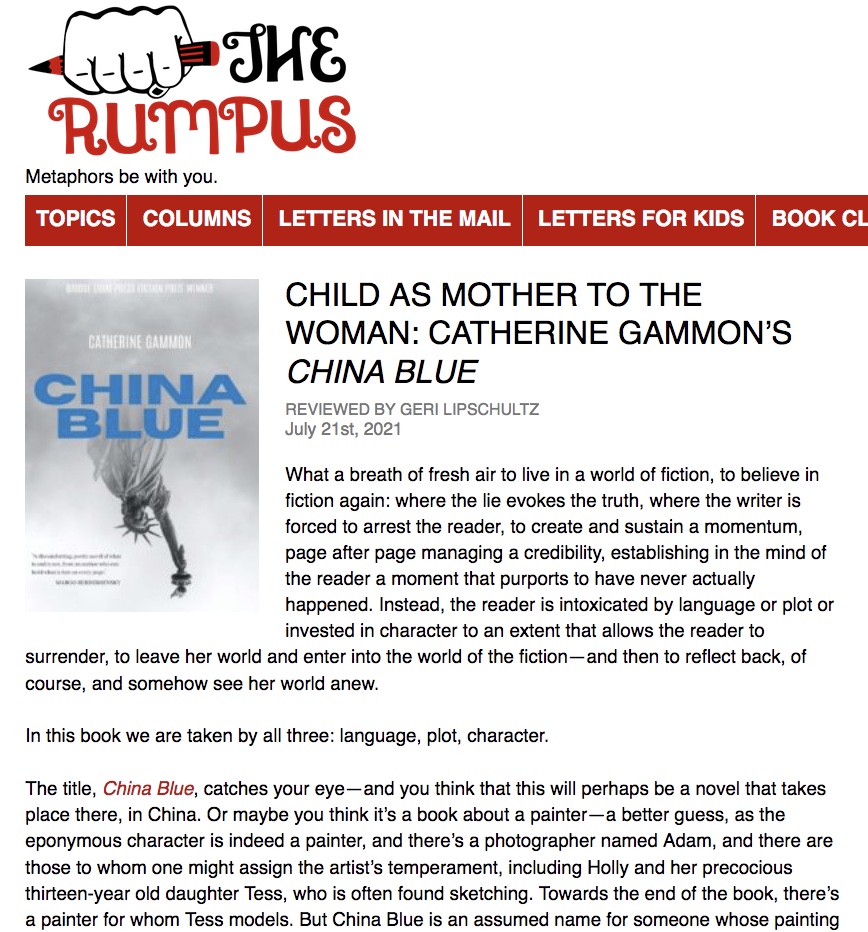
Today at The Rumpus, this brilliant review of China Blue“Child As Mother To The Woman” by Geri Lipschultz

A few new things…

Just a link or two …

First, the recording of the June 24 China Blue reading party at White Whale Bookstore, available to watch on Facebook

Next, a new online publication, “Buffalo,” at The Blood Pudding

Finally, a new short publication in the new print issue of Always Crashing, first page only in the photo.

“Eudora Loved Her Life”

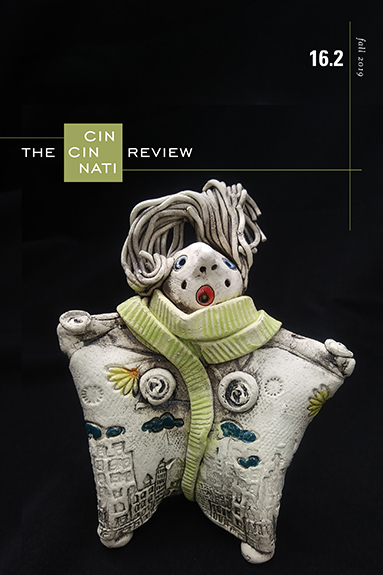
CR_fall2019_covfront_383x575

Cincinnati Review 16.2

Now available, with my recent story “Eudora Loved Her Life.”


Notes on The Hidden Lamp

The following review was written for the San Francisco Zen Center blog Sangha News, and appeared there on November 12, 2013.

The new koan collection, The Hidden Lamp, edited by Zenshin Florence Caplow and Reigetsu Susan Moon, takes as its manifestly traditional starting point the collecting of one hundred Zen teaching stories. The radical difference is not simply that the stories feature women as students, adepts and masters, but that the commentaries and reflections paired with them are offered not by one living teacher, but by one hundred, all women, and from many lineages and Buddhist traditions.

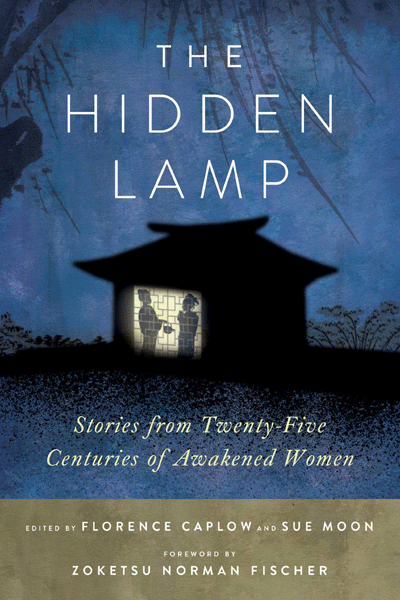
The_Hidden_Lamp_cover_x600T

This diversity brings a palpable vitality to stories that include both the classic and the contemporary, and a single reflection can suddenly shift with startling effect from a traditional way of reading to a wake-up call grounded in engagement with the collective present, as for example when Pat Enkyo O’Hara turns from explication of a koan presenting a playful encounter between Iron Grindstone Liu and Master Guishan Lingyou, to ask,  “What does this koan teach us today? Is it not that New York melts the arctic ice; that karmic threads of colonialism have woven twenty-first century violence; that restitution across the globe rests in our hearts, here at home?”

In a similar spirit are moments like this from Susan Murphy:

In a life-world on the brink of crumbling in mass extinctions, while human forms of insanity are roundly certified as “business as usual,” how will you actualize the cry of the rooster with this whole great body and mind of fields, mountains, and flowers?

And from Joanna Macy:

My attention, too, is so preoccupied with what we, collectively, are doing to our world…. My spiritual practice calls me to come to terms with the destruction we humans are causing. I wouldn’t want an “enlightenment” that would keep me from knowing and feeling the ways our actions are unraveling the very web of life. I want to be present to the suffering that comes with “the spirit of the knife and the axe”—the spirit of bulldozer and chainsaw, of deep sea drilling and mountaintop removal, of factory farms and genetically modified seeds.

And from Natalie Goldberg:

All the meditating in the world doesn’t stop a rape in the Congo. Some effort needs to be made; we must be willing to get our white clothes dirty. We don’t need more wisdom poured into an empty vessel. We need to be willing to hear about horror, broken bones, economic collapse, betrayal.

It is tempting to go on, but these moments that bring timeless practice face to face with contemporary crisis are not the only treasures here.

Most Zen students are likely to be familiar with the expression “the bottom falls out of the bucket,” but how many of us know its origin in the life, work, and enlightenment story of one particular woman? How many of us who chant a dedication to our women teachers that ends with the name Chiyono know who Chiyono was? No doubt such details are not new to every reader, but for me coming across them was one of the many delights of this book.

The story of Chiyono goes like this: In the midst of long and deep practice, on a full moon night, she fills her old bucket at the well. The bucket breaks and the moon’s reflection falls away with the water. This is Chiyono’s moment of awakening, not unlike the possibly more familiar stories of a monk awakening after years of study and practice when his broom sweeps a pebble to ping against bamboo, or another who awakens on seeing a peach tree blooming.

Chiyono’s enlightenment poem expresses her understanding and gives us the well known image:

With this and that I tried to keep the bucket together,
and then the bottom fell out.
Where water does not collect,
the moon does not dwell.

In her reflection on this story, Merle Kodo Boyd offers a fresh take on the image itself:

As much as I may wish to appear competent at all times, I cannot immerse myself in Zen practice without a willingness to come apart. Sometimes it’s appropriate to stop patching things back together. I have come to trust the true freedom of living where the moon does not dwell.

In her own commentary on the koan “The Old Woman’s Relatives,” Caplow captures the spirit of the whole collection when she writes:

But you must understand that it is the asking that matters, not the answer. Because every real asking, every real meeting comes from the place where the Buddha glimmers in the depths. In the asking is the answerer; in the answer is the asker. And in the meeting of the two, there are mountains, rivers, and the whole earth.

The Hidden Lamp is a large and spacious collection, rich with the voices and years of practice of these hundred living women and two and a half millennia of women forebears, known and unknown. I have sampled here only a few of them. For all their richness and diversity, these stories and reflections share the central wisdom expressed by Emila Heller:

Taking refuge in a community of practitioners for so many years gave me the gift of knowing that we are all suffering, and my faith is that there is the possibility of an end to suffering.

May it be so.

The Hidden Lamp: Stories from Twenty-Five Centuries of Awakened Women
Edited by Zenshin Florence Caplow and Reigetsu Susan Moon
Foreword by Norman Fischer
Wisdom Publications
Paperback
440 pages, 6 x 9 inches
$18.95
ISBN 978086171659