The composition is the thing seen by everyone living in the living they are doing, they are the composing of the composition that at the time they are living is the composition of the time in which they are living… Gertrude Stein
writing
Current updates will be posted @nonabiding on Substack, where Catherine also occasionally publishes new short unclassifiables as Little Misfits.
“Ms. Gammon, who publishes her fiction with very small presses, deserves to be more widely read…. These stories portray the suffering caused by desire without censure or sentimentality, in a way that might be Zen detachment or might simply be called wisdom.” — Sam Sacks, Wall Street Journal, February 7, 2024
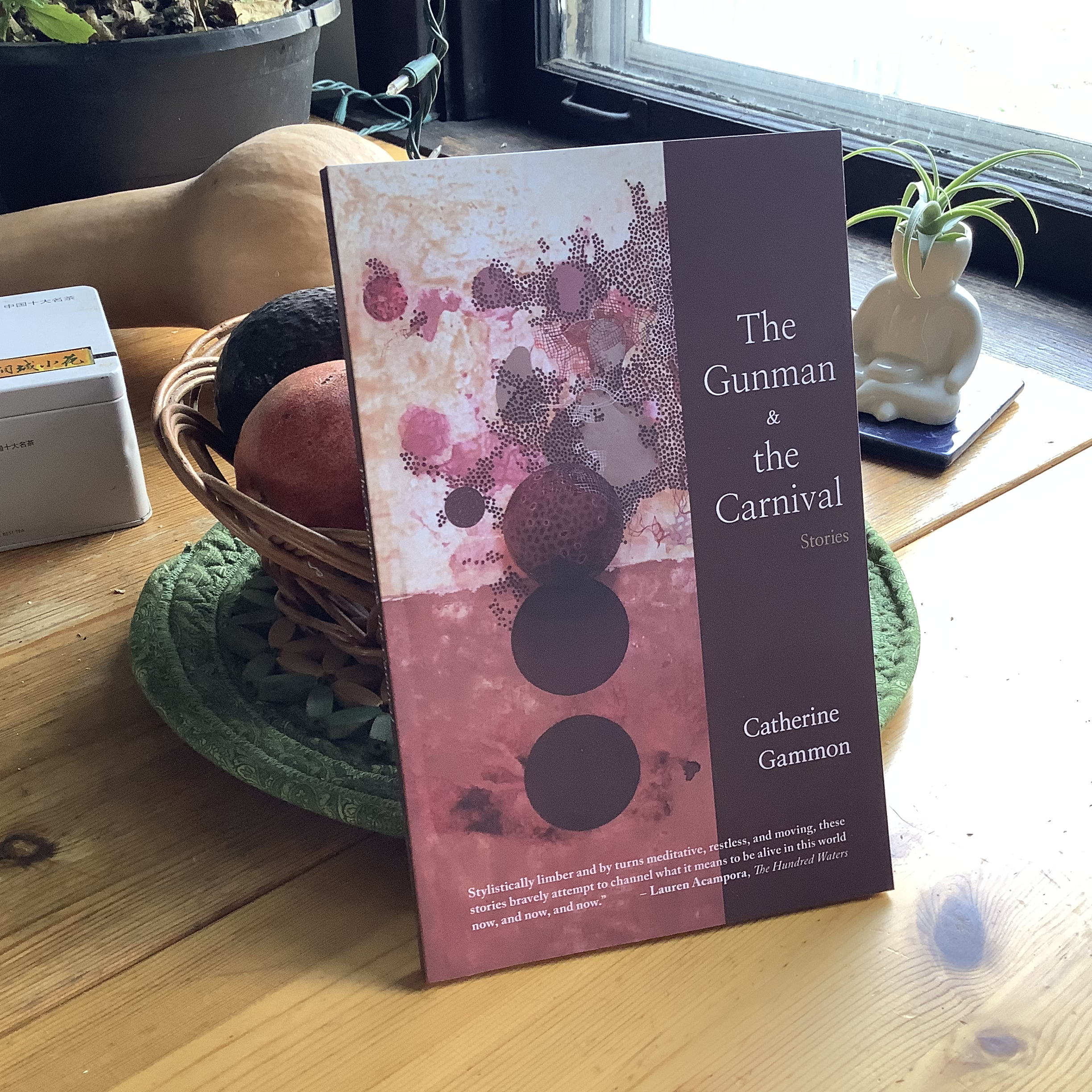
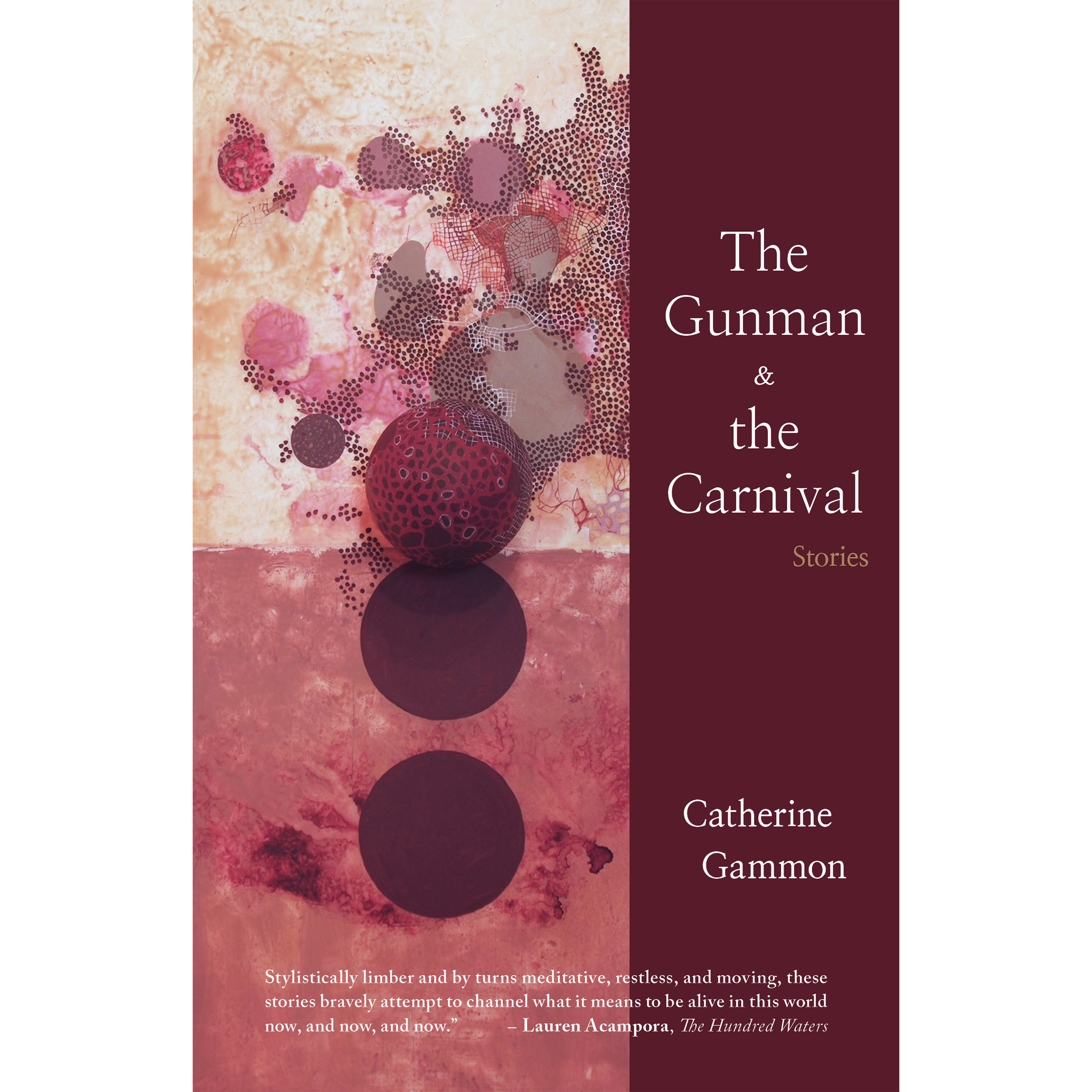
“Here are a handful of dreams crumbled to ash. Actors on the cusp of stardom, who instead of making it, find themselves playing dead bodies and waiting tables. A recovering alcoholic savoring a sense of stability, who gifts herself a birthday walk on the beach only to find a body washed up at her feet. A man and woman who fall easily in love, and then, just as easily, into mutual resentment. What does a person do when their life fails to meet their expectations, when their hopes wilt before they fully bloom? Catherine Gammon’s The Gunmanand The Carnival is a collection full of strikingly familiar disappointments and betrayals woven through with an appreciation for moments of beauty amongst the daily degradations of contemporary life. Told with precision and honesty, these stories are richly nuanced explorations of desire, regret, hurt, and hard-earned acceptance.” — Jenny Irish, author of I Am Faithful and Lupine
“In The Gunman and the Carnival, Catherine Gammon mirrors the brightly fractured nature of our lives at the sharp edge of this American moment. Her characters are recognizable in their striving for human connection in our time of despair and isolation—and in their struggle for footing upon a sinking landscape. Stylistically limber and by turns meditative, restless, and moving, these stories bravely attempt to channel what it means to be alive in this world now, and now, and now.” — Lauren Acampora, author of The Hundred Waters and The Paper Wasp.
“Gammon sharply observes her characters, loves them for their flaws and their hopes, and moves them through worlds defamiliarized by her punchy, powerful prose. Reading The Gunman and the Carnival made me revel in the joy and intensity of what a story can show us.” — Gwen Kirby, author of Shit Cassandra Saw
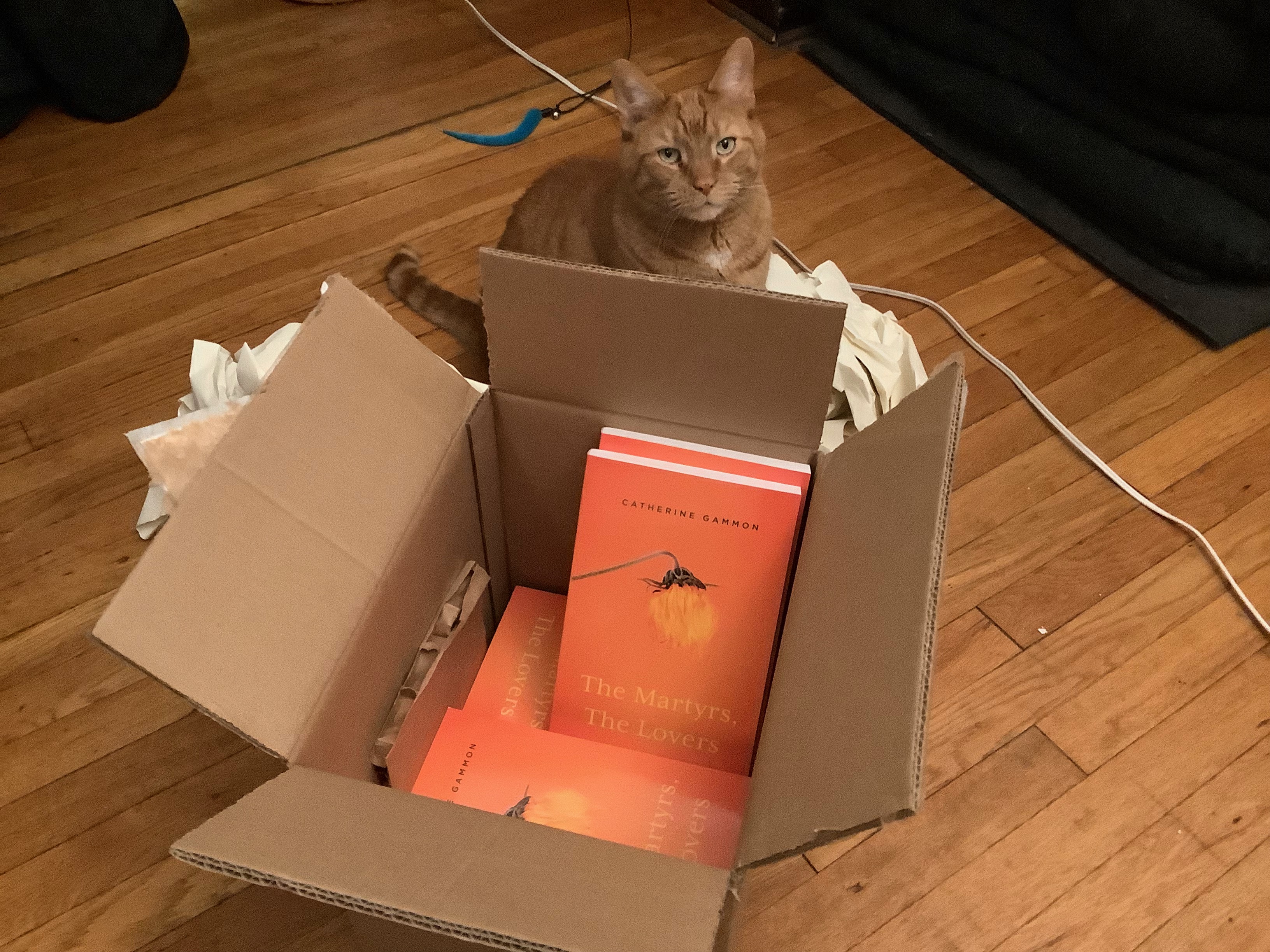
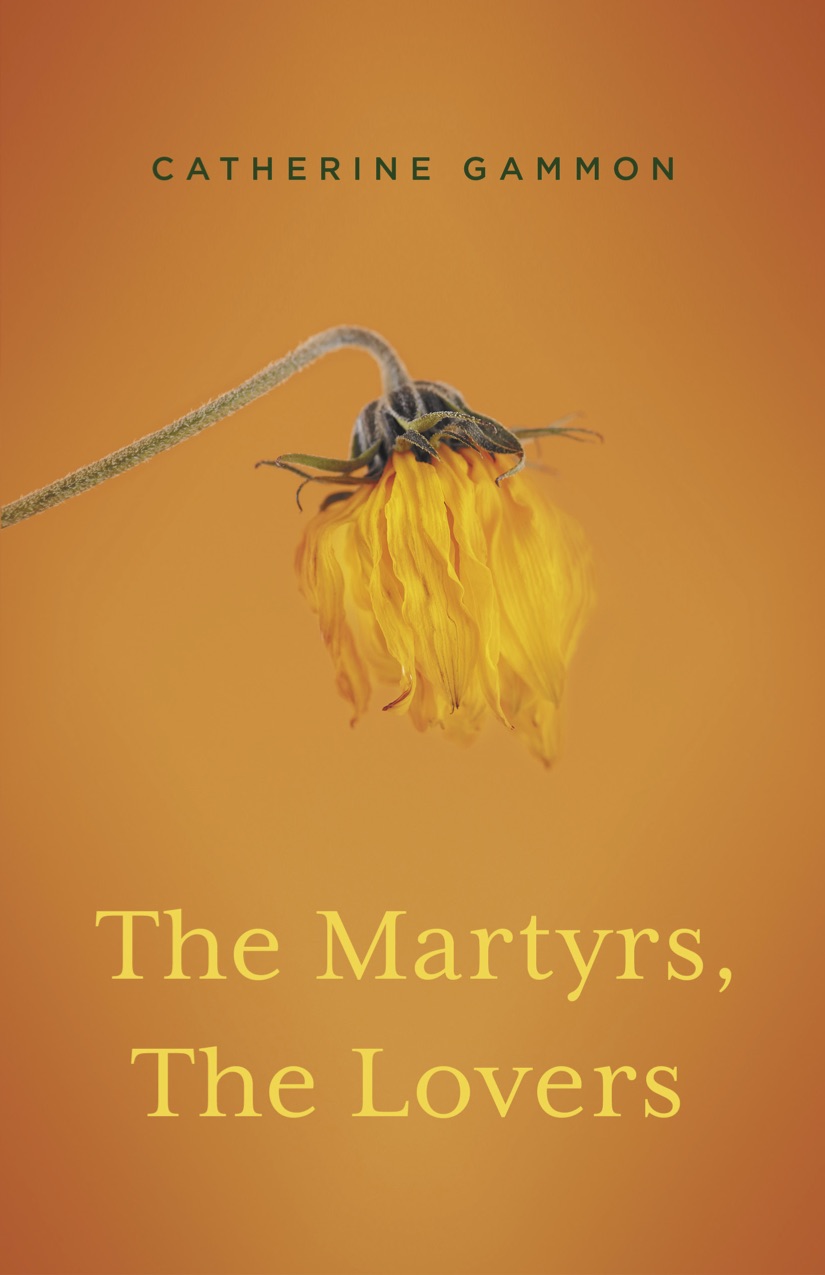
“Written in hypnotic and densely layered prose, The Martyrs, The Lovers is an emotionally charged decon- struction of the layered character of Jutta Carroll. Just as Jutta is always using art, books, and historical figures to find comfort and reason, the novel attempts to strike the same resonant chords with readers. “Gandhi knew that the end was to be found in the means: there was no end, is no end, the means themselves are the end, the only end: the present, the ongoing present.” Like Gandhi, Gammon isn’t concerned with endings but with ideas, especially the ones that resonate now.”
“Reading this book sent me to Petra Kelly’s story; I ransacked the Internet for information. But it is Gammon’s framing of the story that makes it even more haunting—the way she casts Jutta into the net of a very real history as well as the webs of the author’s own imagination. From this exhilarating exercise emerges a palimpsest, with Jutta’s story atop Petra Kelly’s, and a doubly powerful book. The Martyrs, the Lovers is deeply resonant for our day and age, as are the concerns of both the protagonist and the real politician and activist upon whom she is based.” (The long form of this review appears at Compulsive Reader)
“Gammon’s thorough and nonjudgmental thematic examination of false martyrdom and silence concealing masked generational and personal trauma will haunt readers long after the novel is complete. … [W[hile these jumps through time and space blend fact and fiction, they also act as testaments to Gammon’s literary and stylistic precision. However, it is the smaller moments, tucked deep within, where true beauty and vulnerability radiate – we connect with Jutta and each other through continued plights for causes, but we cannot tout justice for all without simultaneously taking care of our own biases, vulnerabilities, and mental, physical, and emotional wellness.”
Background on The Martyrs, The Lovers:
“When I first researched the life and work of Petra Kelly, I was preparing to write a book different from The Martyrs, The Lovers in every obvious way. An as-told-to biography, in collaboration with Petra, the book to come was meant to focus on her understanding of herself and her evolution as an environmental activist….” (read in full at Necessary Fiction’s Research Notes)
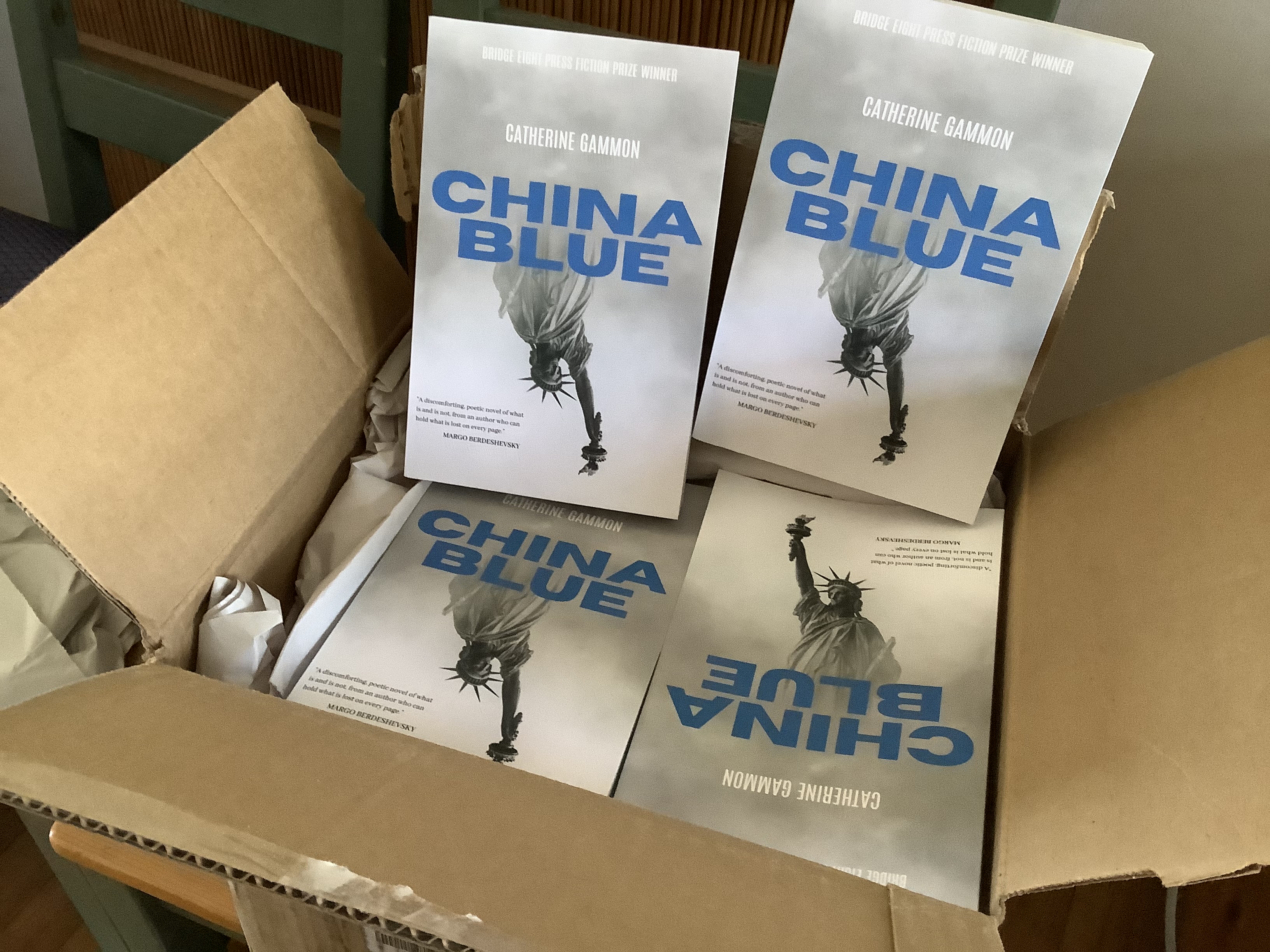
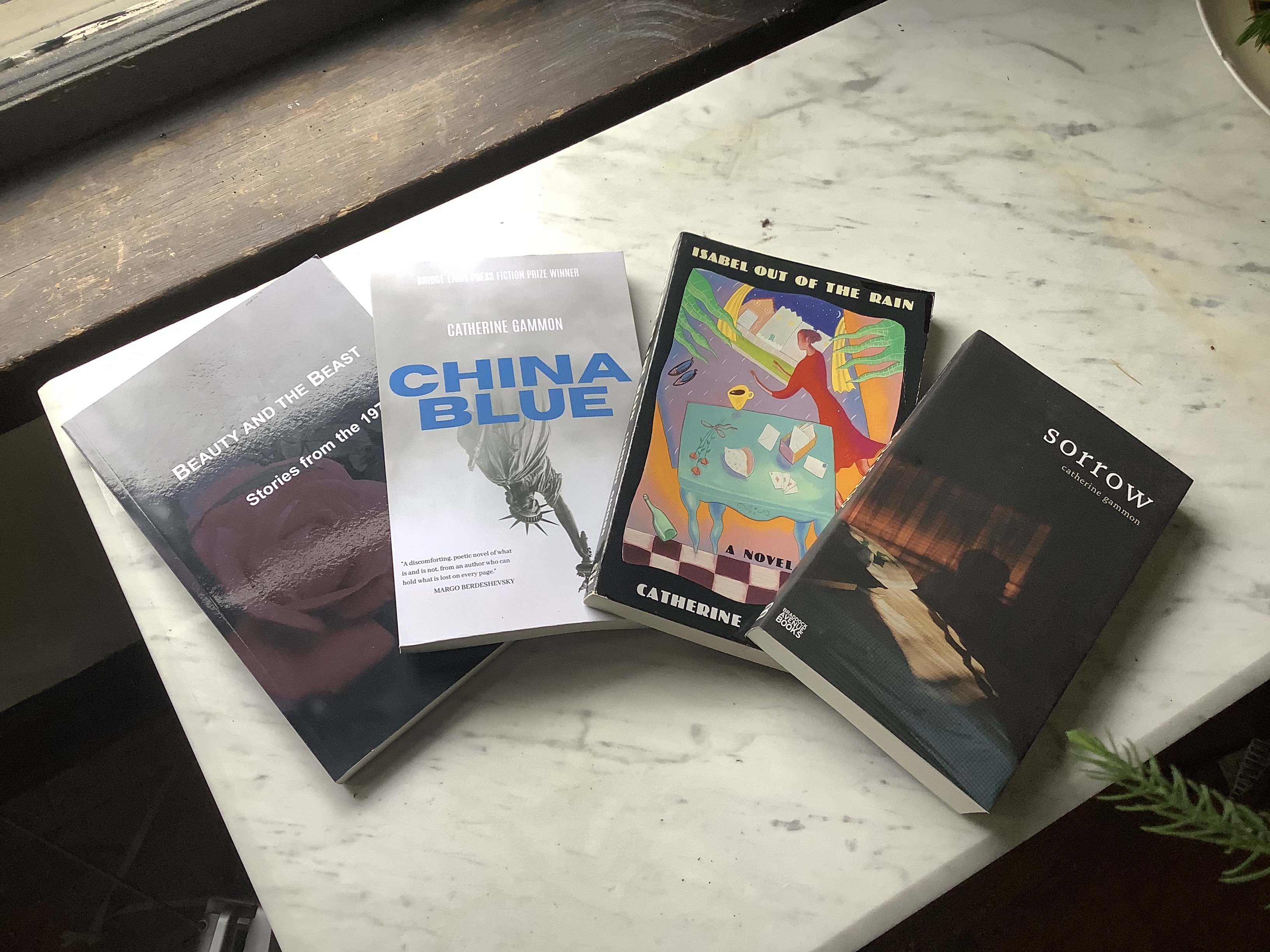
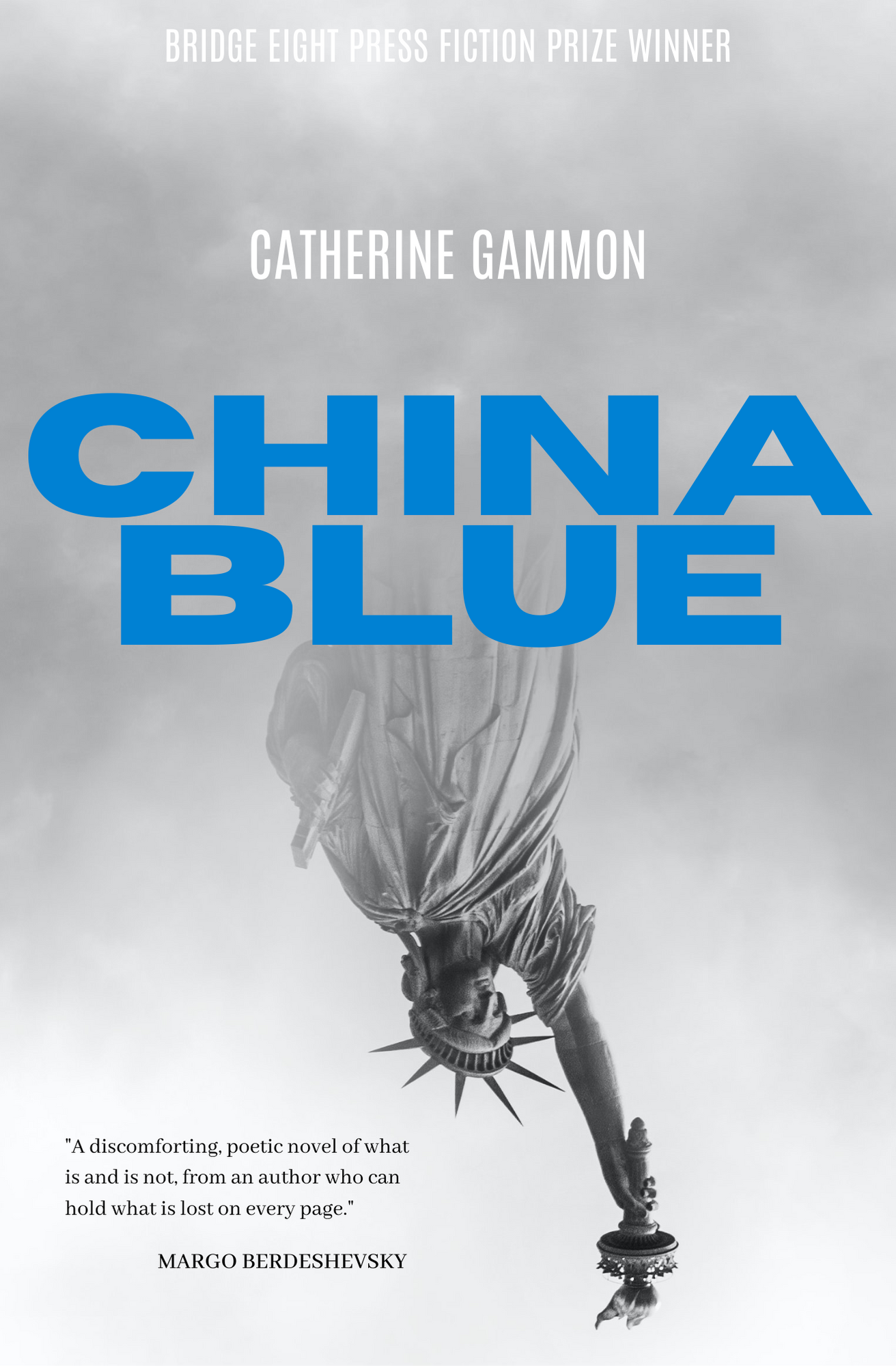
“Catherine Gammon’s kaleidoscopic and complex novel China Blue is both gorgeously and fluidly written and immovably fixed by the boundaries of human suffering. Taking place in the shadow of the Vietnam War and during the American destabilization of El Salvador, China Blue assembles its montage from the jagged lives of women and men entrapped by addiction, poverty, and sexual obsession. Gritty, sorrowful, clear-eyed, and vivid, China Blue is a powerful book, and one of uncompromising originality and integrity.” —Lynn Emanuel, author of The Nerve of It, Noose and Hook, and Then, Suddenly—
“A haunted dream of a book—by turns poetry, philosophy, love story, always beautiful, enigmatic, strange—China Blue is a fiery declaration of all that is inexpressible about desire and loss and the need to find a home in a world in which even the most solid and real of things feel often less than completely solid or real. “The sky is paper. The wind is up. The trees are rasping.” And Catherine Gammon brings this world to life like a demon.” —William Lychack, author of Cargill Falls and The Wasp Eater
“Catherine Gammon innovates a stark and filmic fiction in her remarkable China Blue. Read this unnerving and haunting book! A shape-shifting narrative of intersecting and cascading voices and warped secrets. Characters abuse, comfort, appear, and disappear in the cold. “My innocence is my wickedness. I go dancing on the graves.” “I. He. You … Every voice the mind.” A hallucinatory ride through Joycean streams of consciousness that catapult a child-woman anti-heroine into a girl-child’s sex-abused desire. Unable-to-love floundering men come and go from her unable-to-love mother’s bed and table. Small town winter-beach denizens, homeless vodka-warmed escapees, nowhere-to-go-but-anywhere runaways. A bus ride away, New York City acquires these unraveled threads. A once-upon child who would have controlled if only she had mastered magic, or known what was real in the invisible. Her “I will not pity you” to an abuser. Her vagrant mother, their home like sand. And maybe a return. A discomforting, poetic novel of what is and is not, from an author who can hold what is lost on every page.” —Margo Berdeshevsky, author of Before the Drought and Beautiful Soon Enough
“China Blue’s characters drift away, are lost, and return as ghosts of themselves, but while the facts of their stories may sometimes seem phantasmatic, the hurt here is harrowing and unquestionable. If you’re looking for a novel that is unsparing in its depiction of dysfunction and abuse but still elegant and empathetic, you’ve found it.” —Gabriel Blackwell, author of CORRECTION and Madeleine E.
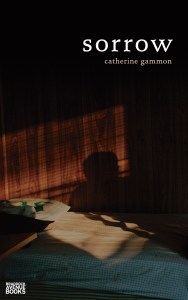
“Sorrow is a devastating, gorgeous. impossible, unstoppable book–powered by unbearable desire, murder, a stunning turbulence of language and story. The real triumphs of this novel are Anita, Magda, Danny, Tomas, Cruz, people you will never forget even though tragedy, abuse, and circumstance did their best to render them invisible. A tour de force.” – Eve Ensler, author of The Vagina Monologues and In the Body of the World
“What Sorrow illustrates with such dark and devastating beauty is that the heart that is forced out of innocence into terrible knowledge will one day utter its grief, and when it does, the sound, like its source, will be unimaginable. One of the many astonishing things about Catherine Gammon’s novel is the exacting emotional and psychological candor with which it is written. Never does the book blanch for the sake of false comfort; never does it allow the reader to dodge harrowing truths, those truths humanity most urgently needs to confront. It is a work of profound courage and integrity.” – Kellie Wells, author of Fat Girl, Terrestrial.
“Think of a female Dostoevsky. Think of a female Raskolnikov. Gammon’s modern turn on the classic tale takes us into the mind, heart and soul of a woman who has been the victim of sexual abuse in childhood; but, in so doing, she illuminates the dynamics of power and redemption to which we are universally subject. Sorrow is a stunning page-turner and unforgettable.” – Toi Derricotte, author of The Black Notebooks and The Undertaker’s Daughter
Catherine Gammon is that rarest of entities, a gifted prose stylist with vision and high moral purpose. Her work is intense, penetrating, and about as ephemeral as the Himalayas. Brilliant is a term at risk of fading from overuse; we must all be careful not to devalue it any further by declaring a new writer of brilliance every other week. With that in mind, I hereby spend one of my extremely limited stock. Gammon is a brilliant writer, and an important one. —Michael Cunningham
Catherine Gammon’s novel has the mesmerizing quality of rain— Illusive yet intensely physical, Haunting yet somehow comforting, Familiar yet consistently brand new. It cleanses. It melts time. It washes away that which is not true. —Eve Ensler
It’s a marvelous book. Its life and its range take my breath away. —Michael Burkard
From Publishers Weekly Gammon crafts a solid psychological mystery with Oedipal undercurrents that arise from a mist of confusion and nightmarish flashbacks—of Vietnam, of sexual abuse—becoming clear only at the finish. Sometimes the prose in this first novel is thick, asking more questions than it answers. But the conclusion strikes with force owing to its stealthy, veiled approach. Copyright 1991 Cahners Business Information, Inc.
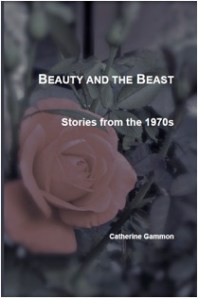
Fiction from the 1970s, early stories of loss and obsession, voices from another century, another planet, voices exploring themselves, both innocent and haunted, a time capsule, message in a bottle from a forgotten present, memory of the future. Or simply a collection of stories, an old collection, early successes and failures, the young writer this older writer used to be.
Beautifully reviewed at Grab the Lapels by Jennifer Vosters.
“Thanksgiving,” forthcoming, 3:AM, August 31, 2026 “Insomnia, October,” Necessary Fiction, December 24, 2025 “Rain. Cardinal. Wren.” and “Garden Song,” The Fourth River, 2025 “Breadcrumbs, Hanna and Joe,” Orca, Spring 2025 “Swimming Home,” great weather for MEDIA, July 2024 “Not Interested,” fractured lit, April 21, 2022 (3rd place Micro Prize) “Agency,” Orca: A Literary Journal, November 2021 “In the future perhaps he will have another chance,” Vol. 1 Brooklyn, August 1, 2021 “Buffalo,” The Blood Pudding, Issue 6, July 2021 “Dangerous,” Always Crashing 4, June 2021 “Ursula and Will,” The Missouri Review, Winter 2020 “Eudora Loved Her Life,” Cincinnati Review, Fall 2019 “Invocation,” New England Review, Spring 2018 “Juliet in the Temple Kitchen,” The Collagist, October 2017 “Juliet and Brother John,” The Collagist, April 2017 “Her Life As A Nomad,” Storyscape, November 2016 “In Absence,” Kenyon Review Online, December 2015 “What Is Romeo?” The Collagist, November 2015 “Kafka Writes to Romeo / Romeo Writes Back” in Artifice, Issue 4 (November 2011). And check out Artifice’s playful inquiry into apocalypse.
[…] Braddock Avenue Books in 2013, was a finalist for the Northern California Book Award. Her novel Isabel Out of the Rain was published in 1991 by Mercury House, and her shorter fiction has appeared in literary journals […]


 Catherine Gammon
[…] Braddock Avenue Books in 2013, was a finalist for the Northern California Book Award. Her novel Isabel Out of the Rain was published in 1991 by Mercury House, and her shorter fiction has appeared in literary journals […]
[…] © Catherine Gammon. This excerpt is published here courtesy of the author and should not be reprinted without […]